

If you are not a subscriber of The Fanbase Builder, join 1.000+ artists, creators, and music industry executives who receive it for free.
Let’s dive into today’s topic:
Navigating AI beyond the hype in 2026
How artists can become AI experts just by building stronger intuition.
Why it matters
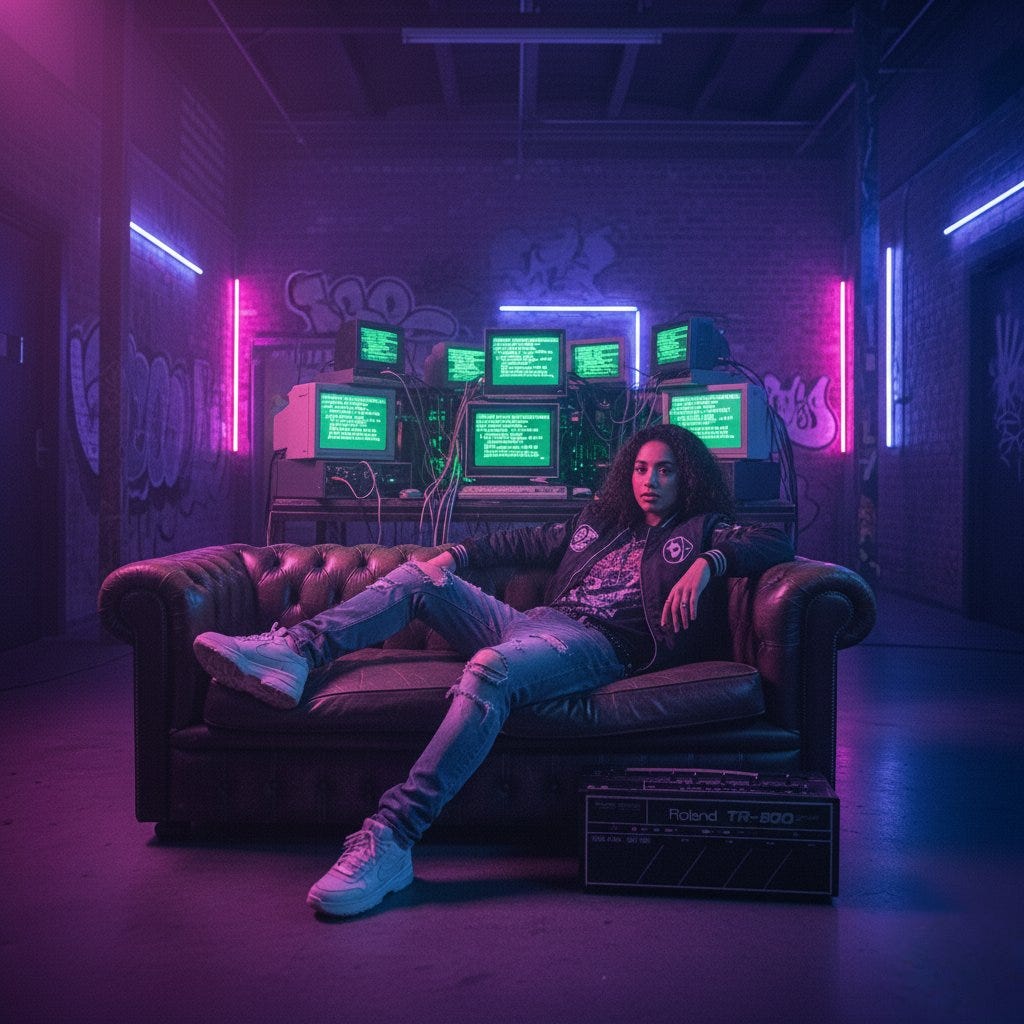
In the early 1980s, the Musicians’ Union in the UK fought a bitter war against the synthesiser. They believed this new machine would make human orchestras at West End theatrical productions obsolete. Obviously, they were wrong. The artists who bothered to open the manual and learn how to tweak the knobs created entirely new genres.
With AI, we’re currently standing at a similar precipice. One side screams that AI is theft and will replace us, while the other side, mostly self-proclaimed AI-experts, peddles cheap shortcuts and magic prompts. Both sides create a false sense of urgency and inadequacy for artists.
AI is here to stay and will fundamentally change human life and work. Like synthesisers, artists need to know what the machine is capable of, where it hallucinates, and how to push it to break creative boundaries.
How it works
The problem with “ChatGPT experts” is that they are merely tool experts. Just as knowing how to use Excel does not make one a mathematician, knowing how to prompt a specific chatbot version does not make one an AI strategist. Tools change, and often rapidly. The AI expertise required is mastering the mindset, not the tools.
To navigate AI beyond the hype, we must distinguish between the technology and the interface.
The technology is the underlying capability of Large Language Models (LLMs) and generative tech. It is evolving to become faster and smarter, much like computers have doubled in speed every two years for decades.
Tools are the specific products like ChatGPT, Claude, Gemini, Mistral, MidJourney, Runway, etc. These change drastically every few months.
Relying on an AI guru to teach you specific tools and prompts is a short-term strategy because the landscape shifts too fast.
Early 2025, specific prompt engineering hacks were required to get good results. Today, modern models understand natural language so well that those hacks are obsolete.
Six months ago, ChatGPT was dominant. Now, Gemini and Claude have leapfrogged ChatGPT in quality, and developers are increasingly shifting to cheaper APIs like DeepSeek.
By January 2027, the market leader could be a tool that doesn’t exist yet.
Instead of rote learning commands, I recommend building stronger AI intuition. For me, that’s about understanding what AI can do right now to boost your creativity and processes, and have a sense of what it might do next year.
We are still in the very early stages of this technology. It’s like the internet in the late 90s, undeveloped and often clunky. That’s good news. It means that if you invest the time to build AI intuition now, while everyone else is chasing shortcuts, you will be the expert in the room by December.
Yes, but..
I am not an AI apologist. I know that models are trained on copyrighted music, and that artists often only benefit slightly from agreements between rights holders and AI companies. This is a massive ethical and legal failure.
However, refusing to engage with this technology until it is ethically pure is a career risk. The fear of replacement is real, but history suggests otherwise. We should not view AI as a replacement for human-created music, but as a new instrument. It is a teammate that requires direction, taste, and curation.
Take action now
Here is a starter kit for building stronger AI intuition:
Pick a tool that’s not ChatGPT. My current recommendation is to start with Google Gemini.
Use it every day. It does not have to be for high-stakes work. Play with it. Understand what works, and what not.
Switch tools each month. Understand the nuances between the frontier models developed by the leading AI labs.
Treat AI as a teammate. Approach it as an external consultant, not as an intern. Do not just ask it to write a post. Tell it who you are, who your fans are, and what you’re trying to achieve. Debate with it.
Retain critical thinking. Never copy and paste blindly. Challenge the output. Ask the AI, “What are the counter-arguments to this idea?” or “Critique this strategy from the perspective of a cynic.” or my favourite “, What can I do to further improve this?”
Create something cool, don’t just optimise. This is the fun part. Use AI to generate something that didn’t exist when you woke up this morning, like code, visual art, research, or even music. While doing so, remain critical of how the model was trained and be mindful of copyright-protected data.
Your thoughts
Further reading
The day the ‘Loony’ Musician’s Union tried to kill the synthesizer (MusicRadar)
How I Built a Computer Game for my Song Release (Step by Step) (Sound of Fractures)
Mollick, E. (2024). Co-Intelligence: The Definitive, Bestselling Guide to Living and Working with AI. Random House.
Three Years from GPT-3 to Gemini 3 (Ethan Mollick)
The blueprint trap: Why copy-paste strategies fail (The Fanbase Builder)
Google’s latest tools could change how artists use AI (The Fanbase Builder)
How artists can get recommended more in ChatGPT and Claude (The Fanbase Builder)
The genie is out the bottle and the technology will only improve. Learning the tools makes sense for all creators. Great post 💯